
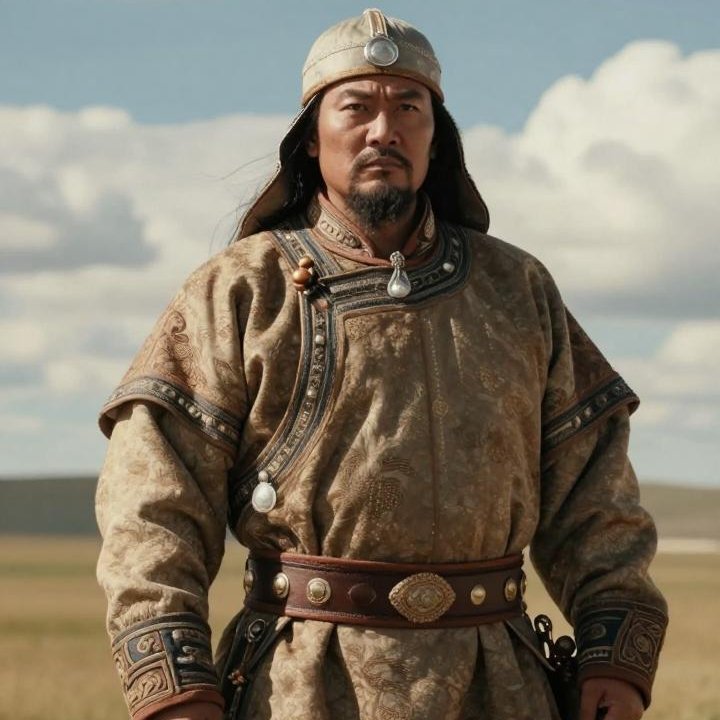
Post-house Earth

Genghis Khan

Post-house Earth is a type of Nayin in the Five Elements philosophy, corresponding to the Chinese Heavenly Stems and Earthly Branches Wushen and Jiyou. It embodies vast tolerance, a journey of ten thousand miles, universal vision, bold pioneering and integration, with grand vision.

The representative figure of this spirit is Genghis Khan. He unified the Mongol tribes, led expeditions that opened channels of communication between Eastern and Western civilizations, promoted ethnic integration with a broad mind, and shaped the world pattern.

Daily trivialities easily narrow our hearts, making us fixate on gains and losses, until the path of life grows smaller and smaller.

Similar Posts

  • Roadside Earth

    George Washington Roadside Earth is a type of Nayin in the Five Elements philosophy, corresponding to the Chinese Heavenly Stems and Earthly Branches Gengwu and Xinwei. It embodies calmness, steadiness, modesty, and quiet responsibility, laying a solid foundation without chasing empty fame. The representative figure of this spirit is George Washington. He led the American…

  • Roof-top Earth

    Wilbur Wright Wushang Tu (Roof Tile Earth) is a type of Nayin in the Five Elements philosophy, corresponding to the Chinese Heavenly Stems and Earthly Branches Bingxu and Dinghai. It embodies pioneering foundations, solid reliability, and steady progress—breaking limits from zero to one, step by step. The representative figure of this spirit is Wilbur Wright….

  • Sand Earth

    Isaac Newton Sand Earth is a type of Nayin in the Five Elements. It corresponds to the Chinese Heavenly Stems and Earthly Branches Bingchen and Dingsi. The symbolic state of this Nayin is introverted, profound, and builds up strength quietly before achieving great success. It appears low-key and gentle, yet contains extraordinary wisdom and immense…

  • Wall Earth

    Wolfgang Amadeus Mozart Wall Earth is a type of Nayin in the Five Elements philosophy, corresponding to the Chinese Heavenly Stems and Earthly Branches Gengzi and Xingchou. It expresses delicacy, refinement, gifted grace, and pure beauty, adorning the world with talent. The representative figure of this spirit is Wolfgang Amadeus Mozart. He rose to fame…

  • Long Flowing Water

    Leonardo da Vinci Long Flowing Water is a type of Nayin in the Five Elements philosophy, corresponding to the Chinese Heavenly Stems and Earthly Branches Renchen and Guisi. It symbolizes constant flow, versatile talent, and vibrant vitality—always exploring and pushing boundaries. The representative figure of this spirit is Leonardo da Vinci. He excelled in painting,…

  • Pomegranate Wood

    Vincent van Gogh Pomegranate Wood corresponds to the Chinese Heavenly Stems and Earthly Branches Gengshen and Xinyou. It embodies vibrant, intense vitality—blooming passionately even in hardship, sincere and extraordinarily productive. Vincent van Gogh lived a life of hardship, yet he poured his entire being into his brush, setting his soul ablaze with color. The weariness…

Leave a Reply

Your email address will not be published. Required fields are marked *